A blouse can fit well and still gape when you sit down. A wrap dress can look right in the mirror, then shift the moment you walk. Fashion tape can help with those small gaps. The trick with fashion tape is to use it to guide the cloth, not to force a poor fit.
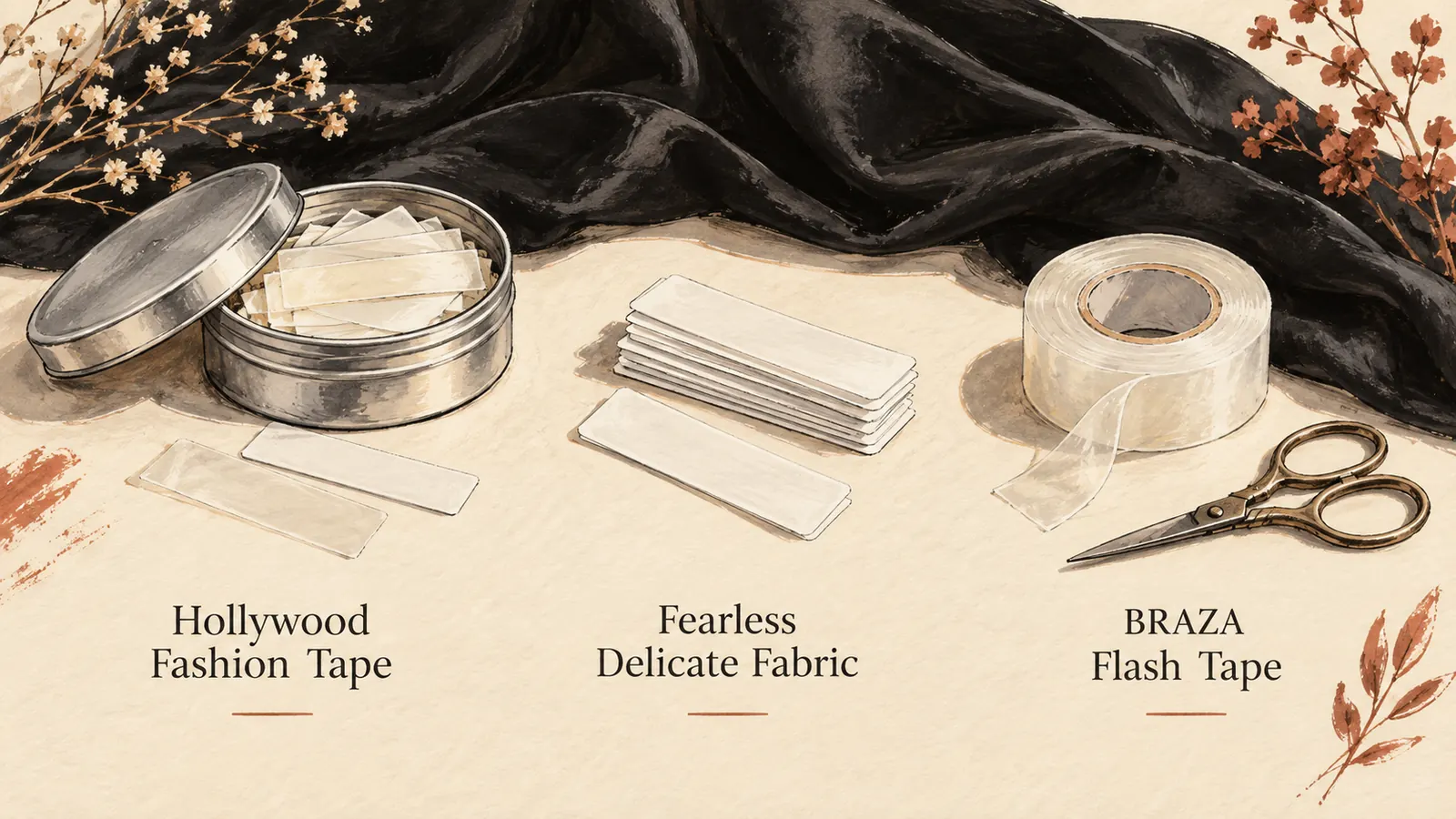
For a first fashion tape purchase, I like a tin of pre-cut strips. They are easy to stash in a bag, and you do not need scissors. For long hems or a spot with an odd shape, I prefer a roll. Here are the three picks I would weigh up, and where each one makes sense.
Three fashion tape picks at a glance
| Tape | My pick for |
|---|---|
| Hollywood Fashion Tape | Quick fixes and a small bag |
| Fearless Delicate Fabric | A fabric-specific choice to test on fine cloth |
| BRAZA Flash Tape | Custom lengths for hems and necklines |
1. Hollywood Fashion Tape: the easy first buy
Hollywood Fashion Secrets sells its classic fashion tape in a tin with 36 pre-cut strips. The listed US price is $8.99. The clear, double-sided strips are made for skin and fabric. The tin is the reason this is my first pick: the paper backings stay together, and a few spare strips are easy to bring along.
I would use this format for a small blouse gap, a bra strap that peeks out, or a neckline that needs a little help. A strip is less fuss than measuring and cutting a roll while you get dressed. It also makes sense as a spare in a wedding bag, when you may not know which small fix will come up.
The tradeoff is size. A pre-cut strip may be too long for a tiny corner or too short for a long edge. You can use more than one, but I would not build a thick patch of tape. Extra layers can make a light top look stiff.
Worth it for: someone who wants one simple pack for now and then. Think twice if: most of your fixes need long, custom strips. A tin of tape is handy, but it is still a set of small pieces.
2. Fearless Delicate Fabric: a cautious choice for fine cloth
Fearless Delicate Fabric tape comes in a 50-strip pack, listed at $14.99. The brand names silk, chiffon, satin, and lace as uses. It also gives each side a job: the side with the printed liner goes on skin, while the plain side goes on fabric. Read the packet before you peel it.
That clear split makes this worth a look for a thin dress or fine blouse. I like being told which side touches what. It takes one small bit of guesswork out of the job. It does not make the tape safe for every weave, dye, trim, or finish.
Buyer feedback on the product page is mixed. Some buyers praise the hold, including one who used it for bra straps. Others describe poor hold on satin or residue on fine fabric. Those reports are a good reason to test the exact garment. A label that says “delicate” is not a promise that every silk top will come away clean.
Worth it for: someone who wants strips sold for fine fabrics and has time to test them. Think twice if: the dress is precious, rented, or cannot be spot-tested. In that case, I would ask the garment maker or a tailor before sticking anything to it.
3. BRAZA Flash Tape: better for custom lengths
BRAZA Flash Tape is a 20-foot roll of double-sided clothing tape, listed at $10. The brand lists uses on skin and fabric, including necklines, loose hems, and wrap dresses. You cut the length you need.
This fashion tape format is my choice for a dress edge that needs more than one short strip. It can also suit a quick hem fix where the cloth is light and the fold is small. You get control over the length, which is the main reason to choose a roll.
The cost per foot looks useful, but feet and pre-cut strips are not the same unit. I would not call the roll the cheapest choice for everyone. If you need two small fixes all year, a huge supply does little for you. If you reach for tape each week, the roll may make more sense.
Worth it for: custom jobs at home, with scissors close by. Think twice if: you want a tiny, ready-to-use fix in a purse. Loose tape and a rushed cut can be a fuss when the car is already outside.
Double-sided fashion tape: what can it hold?
Fashion tape is a thin strip of adhesive with two sticky sides. One side grips the garment. The other grips skin or another bit of cloth, depending on the product. That can close a small gap without a pin showing through.
Clothing tape comes as strips, dots, and rolls. Strips suit short, straight areas. Dots suit a small point. Rolls give you more freedom with length. The right shape should sit inside the edge you want to secure, with no sticky part left out.
Do not confuse clothing tape with wide body tape made for breast lift. They have different jobs. Small clothing strips are there to keep cloth in place. I would not ask them to bear weight or act as a bra.
Nor would I use craft tape, packing tape, or a glue dot meant for paper on my skin. “Double-sided” tells you how many sides stick. It does not tell you what they can safely stick to.
Clothing tape for the clothes in your closet
For a blouse gap, look at the pull across your chest first. If the buttons strain even when you stand still, tape will be fighting the fit all day. A different size or a small sewn snap may be a better long-term fix.
For a low neckline, put the garment where you want it to sit before you choose a tape spot. If you have to pull hard to hold it there, it may spring back as you move. Try sitting, bending, and raising your arms. The tape needs to work in those positions, too.
For a smooth dress, deal with the layer underneath as well. My guide to seamless underwear explains how cut and flat edges affect lines. Tape can keep a dress edge still. It cannot hide a tight waistband beneath it.
I would keep quick hem fixes for light cloth and short-term use. A heavy cuff or long, dragging hem puts more strain on a bond. A tailor can make a lasting change without leaving you to check the tape each time you walk.
Skin-safe and fabric-friendly: read the claims
I want confidence in a fix, but I would not treat fashion tape as an ultimate solution to wardrobe worries. A strong adhesive may hold well yet be hard to remove. A gentle adhesive may suit one fabric and fail on another. The useful features are clear directions, the right format, and a small test that goes well.
“Hypoallergenic” and “fabric-friendly” are product claims to check, not guarantees. The same goes for “invisible hold.” A discreet strip can still show beneath sheer clothes. If you want reliable support from fashion tape, start with an outfit that fits and moves well on its own.
Consider the surface, too. A loose knit leaves less flat material for fashion tape to grip. Lace, beads, and rough cloth can make a bond uneven. Fashion tape is designed for small clothing fixes. Wide body tape is designed for a different kind of support. Choose by the job, not by the strongest-sounding name.
How to apply fashion tape
- Read the pack. Check that it is meant for both surfaces you plan to join.
- Test a small bit on skin and a hidden part of the garment, as the maker directs. Leave time to check the hold and removal.
- Start with clean, dry skin. Keep lotion, oil, and powder away from the spot.
- Peel one backing, place the tape, and press it flat. Follow any directions about which side faces skin.
- Peel the second backing, place the garment, and press. Do not touch the glue more than you need to.
- Move in the outfit before you leave. Bring spare strips if the event is long.
Stop if the tape stings, itches, or pulls at your skin. Do not place it over sore or broken skin. If adhesives have caused a reaction before, a sewn fix may be the easier choice.
How long will fashion tape hold?
I would not buy any of these on the promise of a fixed number of hours. Sweat, body oil, movement, fabric weight, and where you place the strip all change the job. A quiet dinner and a hot dance floor ask very different things of the same tape.
Check the edge now and then. If a strip lifts, replace it with a fresh one on a clean, dry spot. Pressing an oily, worn strip back down is unlikely to give the same bond as new tape.
Plan for the evening you have in mind. A dress that needs a firm tug back into place every few minutes is not made stress-free by a spare tin. My goal is one small, reliable fix so I can feel confident and get on with the night, even if that night is just a loud round of Poetry for Neanderthals with friends.
Remove fashion tape with a gentle hand
Follow the maker's removal directions. Support the skin or fabric as you ease the tape off. Do not yank a strip away from a fine weave. If it resists, stop and check the instructions before adding heat, oil, or a solvent. Those can leave their own marks on cloth.
Remove all tape before the garment goes in the wash. Check for residue in good light. For a delicate or dry-clean-only piece, ask a cleaner about a stubborn mark instead of scrubbing it.
A few last questions
Is fashion tape invisible under clothes? Clear fashion tape can be discreet, but the edge may still show through thin or sheer cloth. Test the dressed result in daylight and under a lamp. Use a small amount, placed inside the garment's edge.
Can I reuse a strip? I would treat these adhesive strips as single-use. Skin oil, lint, and handling affect the bond. A fresh piece of fashion tape is a better bet for the next wear.
Is fashion tape skin-safe for sensitive skin? There is no sure winner for every person. A “skin-safe” or “hypoallergenic” claim does not rule out a reaction. Check the label, follow the test directions, and skip adhesive if your skin does not tolerate it.
Which fashion tape would I buy first? The Hollywood tin for small, occasional fixes. The BRAZA roll for custom lengths. Fearless is worth a look for fine fabrics, with a careful test first. The best fashion tape should solve one small problem so you can stop thinking about your clothes.